Harare, Zimbabwe – 24 August 2026
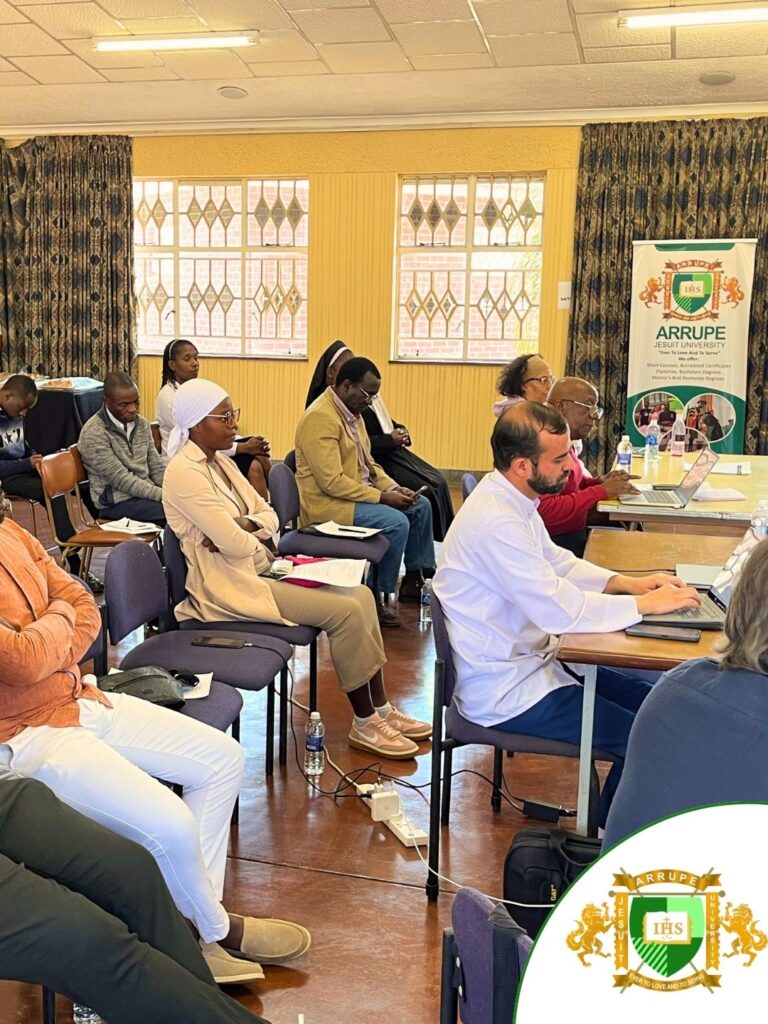
Arrupe Jesuit University (AJU), in partnership with the International Institute of Islamic Studies (IIIS), Qom, Iran, hosted a Joint International Workshop on “Artificial Intelligence and Human Dignity: Christian, Islamic, and African Perspectives.” The workshop brought together academics, researchers, religious leaders and participants for a wide-ranging discussion on Artificial Intelligence and its implications for human life and society.
The discussions were both insightful and thought-provoking, moving beyond the technical capabilities of Artificial Intelligence to consider the ethical, social, spiritual and human questions that come with its growing influence.
The programme opened with an interreligious prayer, followed by a welcome address from Dr Stephen Buckland, Pro-Vice-Chancellor Academics at Arrupe Jesuit University, and a message from His Excellency Archbishop Janusz Stanisław Urbańczyk, Apostolic Nuncio to Zimbabwe.
The keynote presentation was delivered by Dr Muhammad Ali Shomali, President of the International Institute of Islamic Studies. His presentation, “AI, Human Dignity, and the Future of Moral Agency: A Muslim Response to Magnifica Humanitas,” opened an important discussion on Artificial Intelligence, human dignity and the future of moral agency.
The conversation continued with Dr Isaac Mutelo, Director of Quality Assurance/Research and Innovation at AJU, who examined the future of human dignity in AI-integrated brain-computer interfaces from a Christian perspective. Mr Muhammad Javad Munisi, a PhD candidate at IIIS, followed with a comparative reflection on human dignity and justice in the age of AI from Shi’a and Catholic perspectives.
The workshop also gave significant attention to African perspectives. Rev. Fr Mgcini Joseph Moyo, National Pastoral Director of the Zimbabwe Catholic Bishops’ Conference, spoke on Artificial Intelligence and Christianity, while Professor T. Shoko of the University of Zimbabwe explored Artificial Intelligence, African Traditional Religion and digital culture through insights from the Shona worldview.
Rev. Fr Matthew Charlesworth brought a broader and more detailed perspective to the discussion, taking participants through the different aspects of Artificial Intelligence and its growing impact on society. His presentation provided an opportunity to look at AI from a wider perspective, bringing together many of the issues that had emerged during the earlier presentations.
Fr Matthew’s contribution helped to broaden the conversation beyond the question of what Artificial Intelligence can do. It encouraged participants to consider how AI is already influencing different areas of life and the responsibilities that come with its increasing use. His presentation also added to the wider reflection on how society can engage with AI while remaining attentive to human values, dignity and responsible use of technology.
One of the notable strengths of the workshop was the range of perspectives brought into the same conversation. Christian, Islamic and African viewpoints provided different ways of thinking about human dignity, responsibility, justice, stewardship and the common good. The discussions showed that Artificial Intelligence is not only a matter for computer scientists and technology experts; it is also a subject that calls for engagement from theologians, philosophers, educators, researchers, policymakers and society at large.
The workshop further demonstrated the value of dialogue across religious and cultural traditions. The Christian reflection on human dignity and the common good, Islamic perspectives on responsibility and stewardship, and African approaches grounded in relationality, solidarity and Ubuntu all contributed to a richer understanding of the questions surrounding Artificial Intelligence.
The plenary session gave participants an opportunity to engage with the presentations and continue the discussion. It provided space for questions, reflections and further exchange on the issues raised throughout the workshop.
The conversations raised an important point: as Artificial Intelligence becomes increasingly integrated into everyday life, society must give equal attention to the values that guide its development and use. Technological progress brings opportunities, but it also requires responsibility and careful consideration of its impact on people and communities.
For Arrupe Jesuit University and the International Institute of Islamic Studies, the workshop was an opportunity to encourage this kind of engagement. It brought together different traditions and disciplines to reflect on how humanity can respond to the opportunities and challenges presented by Artificial Intelligence without losing sight of the dignity of the human person.
The workshop concluded with a vote of thanks from Dr Prudence Kadebu, Assistant Dean, School of Engineering and ICT and Deputy Director, Research and Innovation at Arrupe Jesuit University.
The discussions left participants with much to consider and reinforced the need for continued conversations on Artificial Intelligence, ethics, human dignity and the common good. As AI continues to develop, spaces for dialogue such as this will remain important in helping society think carefully about not only the future of technology, but also the kind of future we want for humanity.